
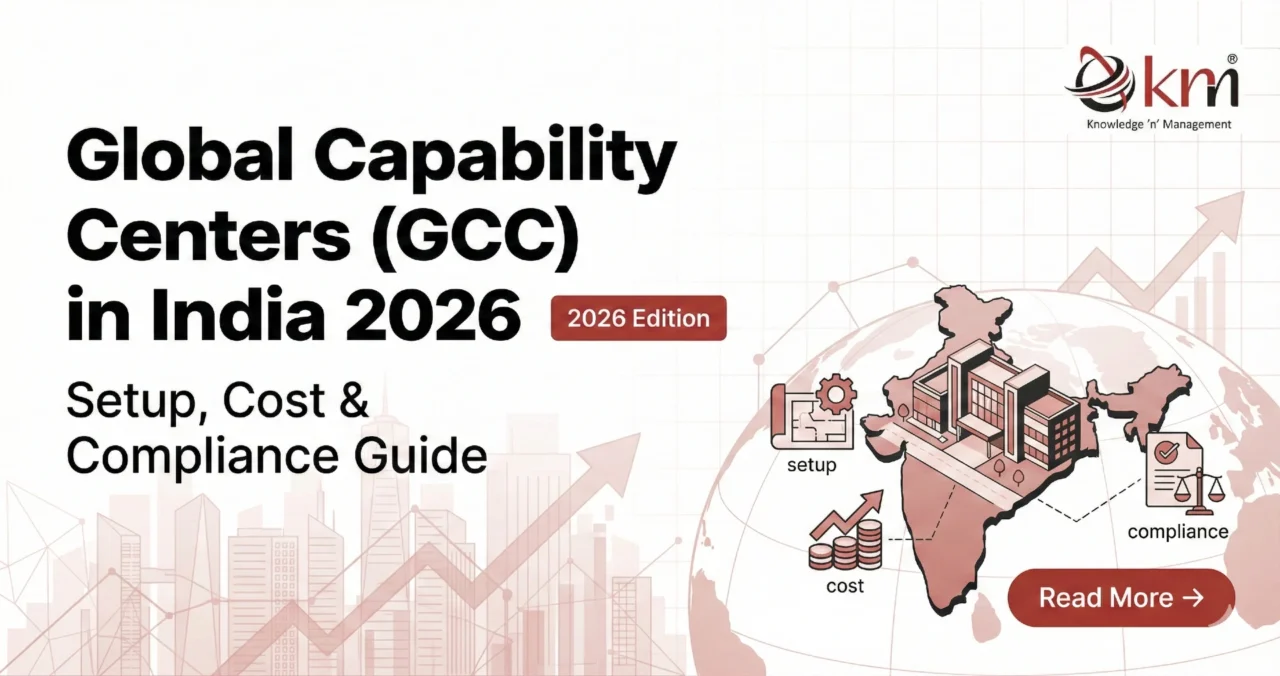
Introduction: India’s Evolving GCC Landscape in 2026
India is a leading destination for Global Capability Centers (GCCs) in 2026, offering advantages in value creation and innovation. GCCs are offshore units of multinational corporations handling specific business functions. India’s appeal stems from its talent pool, digital infrastructure, and supportive ecosystem. The market is shifting towards higher-value activities like R&D and specialized engineering, necessitating a revised approach to setup and compliance.
Key trends for 2026 include expansion into Tier 2 and Tier 3 cities, increased demand for specialized skills, and the adoption of hybrid work models.
Strategic Imperatives for GCCs in India (2026)
Talent Pool and Skill Specialization:
A readily available skilled workforce in IT, engineering, finance, and R&D. Increasing focus on niche digital skills like AI, ML, Data Science, and Cybersecurity. Upskilling initiatives and academic collaborations enhance the talent pool.
Cost Arbitrage and Operational Efficiency:
Significant cost benefits across various business functions. Automation and process optimization further improve operational efficiency.
Robust Digital Infrastructure and Ecosystem:
Advancements in connectivity and cloud computing provide a strong digital foundation. A supportive startup ecosystem and innovation hubs foster innovation.
Government Initiatives and Business Environment:
Pro-business policies and a focus on ease of doing business make India attractive. Government initiatives include investment promotion and sector-specific incentives.
GCC Setup Process in India (2026): A Step-by-Step Guide
- Phase 1: Strategic Planning and Location Scouting:
- Define scope, objectives, and operating model (captive vs. hybrid).
- Analyze location options (metros vs. Tier 2/3 cities).
- Conduct feasibility studies and develop a business case.
- Phase 2: Legal Entity Formation and Registrations:
- Choose legal structure (e.g., Private Limited Company, Branch Office).
- Register with the Ministry of Corporate Affairs (MCA).
- Obtain PAN, TAN, and GST registrations.
- Consider STPI/SEZ registration for incentives.
- Phase 3: Infrastructure and Technology Setup:
- Select real estate and complete office fit-out.
- Establish IT infrastructure, network security, and data center capabilities.
- Adopt hybrid work models and robust cybersecurity frameworks.
- Phase 4: Talent Acquisition and HR Policies:
- Develop recruitment strategies for specialized skills.
- Design competitive compensation and benefits packages.
- Implement HR policies compliant with Indian labor laws.
Cost Considerations for GCCs in India (2026)
Capital Expenditures (CAPEX):
- Office space fit-out and equipment.
- IT infrastructure and software licenses.
- Initial legal and consulting fees.
Operational Expenditures (OPEX):
- Personnel costs (salaries, benefits, recruitment).
- Real estate (rent, utilities, maintenance).
- Technology & communication (internet, software subscriptions).
- Compliance, legal, and audit fees.
- Travel and administrative expenses.
Cost Optimization Strategies for 2026:
- Leverage Tier 2/3 cities for lower talent and real estate costs.
- Implement automation and digitalization to minimize manual effort.
- Employ strategic vendor management practices.
Compliance and Regulatory Framework for GCCs in India (2026)
Foreign Direct Investment (FDI) Norms:
- Adhere to current FDI policy and sector-specific limits.
- Utilize streamlined approval processes for GCCs.
Corporate Laws and Governance:
- Comply with the Companies Act, 2013 (statutory compliances, board meetings, annual filings).
- Implement corporate governance best practices.
Taxation Regulations:
- Understand direct taxes (Corporate Income Tax, Transfer Pricing).
- Understand indirect taxes (Goods and Services Tax – GST).
- Leverage Double Taxation Avoidance Agreements (DTAAs).
Labor Laws and Employment Regulations:
- Comply with the Factories Act, Shops and Establishments Act, Minimum Wages Act, Payment of Gratuity Act, and Provident Fund Act.
- Adhere to contract labor regulations and employment agreement standards.
- Address legal considerations for hybrid work.
Data Privacy and Cybersecurity:
- Understand the implications of the Data Protection Bill.
- Ensure compliance with global and local data privacy standards (e.g., GDPR, local mandates).
- Implement robust cybersecurity frameworks and incident response protocols.
Sector-Specific Compliances:
- Adhere to regulations for BFSI, Healthcare, IT/ITeS, R&D, and product engineering centers.
Fresh Authority Signals: Key Updates for GCCs in India (2025-2026)
- US$60 Billion Sector: India’s GCC sector is projected to reach US$60 billion by 2026, driven by new FDI norms.
- Streamlined Approvals: Revised FDI Policy for GCCs streamlines approval processes.
- R&D Focus: India’s GCC landscape is attracting record investments, with a shifting focus to specialized R&D and product engineering.
- Tier 2/3 Hotspots: Tier-2 & Tier-3 cities are emerging as new hotspots for GCC expansion due to cost arbitrage and talent pool.
- Hybrid Work & Cybersecurity: Evolving GCC models in India emphasize hybrid work and cybersecurity frameworks for 2026.
- Value Creation: Optimizing operational costs and maximizing strategic impact are key focuses for GCC Value Creation in India 2026.
These updates validate the shift towards higher-value activities, the increasing importance of Tier 2 and Tier 3 cities, and the need for robust cybersecurity frameworks.
Published Facts
- The GCC sector in India is projected to reach US$60 billion by 2026, supported by robust FDI norms and government initiatives.
- Tier-2 and Tier-3 cities are increasingly attractive for GCC expansion due to cost arbitrage and access to a fresh talent pool.
- GCC operations in India are shifting towards specialized R&D, product engineering, and niche digital skills, moving beyond traditional back-office functions.
- Evolving work models, including hybrid setups, are driving the need for updated cybersecurity frameworks and compliance in GCC operations for 2026.
Conclusion: Charting Your GCC Journey in India for 2026
India offers significant opportunities for future-ready GCCs, leveraging its talent, cost advantages, and digital infrastructure. Success requires expert guidance to navigate setup, cost, and compliance. Understanding the evolving landscape and partnering with experienced advisors enables businesses to effectively utilize India’s GCC potential.
Connect With Us Today
📞 Call: 01244295170
✉️ Email: services@knmindia.com
🌐 Visit: www.knmindia.com