

Expanding into the vibrant Indian market presents U.S. startups with a plethora of opportunities to tap into a rapidly growing economy. Registering a company in India involves not only navigating its legal system but also optimizing intellectual property (IP) holding and royalty structures to maximize profits. This blog provides comprehensive insights for U.S. startups, exploring strategic approaches for IP holding, royalty optimization, and leveraging Indian government schemes to foster a successful market entry.
Foundation of Company Registration: Understanding Business Entities in India
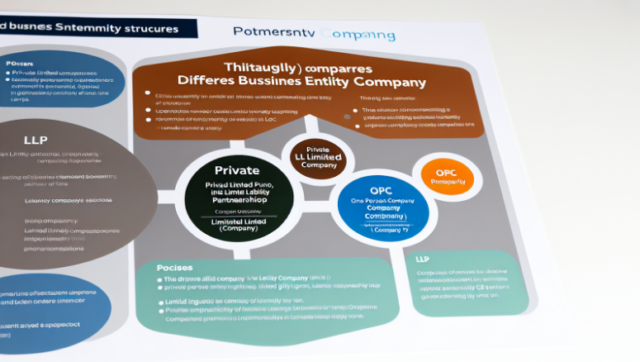
an infographic comparing different business entity structures in India such as Private Limited Company, LLP, and OPC
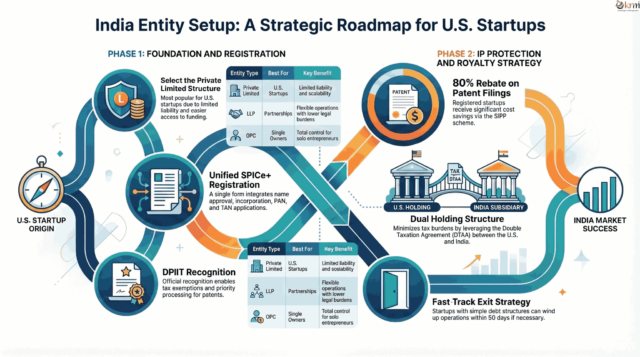
The first step in establishing a business presence in India is choosing the appropriate business entity structure. India offers several options, each with distinct legal and operational implications suited for various business models. The most popular choice for U.S. startups is the Private Limited Company due to its separate legal entity status, which provides limited liability protection—shielding personal assets from business liabilities. This structure also enhances credibility and facilitates smoother access to funding.
Apart from the Private Limited Company, other structures include the Limited Liability Partnership (LLP), a hybrid model combining the benefits of partnership while maintaining limited liability, and the One Person Company (OPC), ideal for single-owner businesses. Understanding the nuances of each framework helps in making an informed decision aligned with your business objectives and growth strategy.
Navigating the Legal Framework: Key Steps for U.S. Startups Registering in India
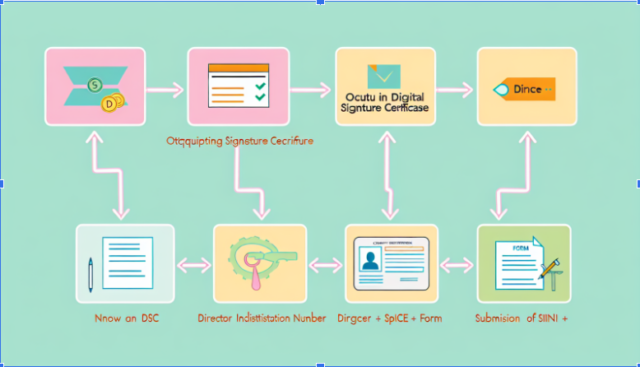
a visual representation of the company registration process in India, highlighting key steps like DSC, DIN, and SPICe+ form
Registering a company in India involves several legal steps, starting with obtaining a Digital Signature Certificate (DSC) and Director Identification Number (DIN) for electronic filing with the Ministry of Corporate Affairs (MCA). The SPICe+ form, introduced by the MCA, integrates multiple registration processes into one, simplifying the application for name approval, incorporation, PAN, and TAN.
U.S. businesses must pay attention to documentation accuracy, including Memorandum of Association (MoA), Articles of Association (AoA), and proof of registered office address. Compliance with the Foreign Direct Investment (FDI) policies is crucial, especially in sectors with caps on foreign ownership. Ensuring adherence to Reserve Bank of India guidelines may also be necessary depending on your sector.
Intellectual Property Considerations: Importance of IP Holding for U.S. Startups

a creative depiction of intellectual property elements like patents, trademarks, and designs being protected in India
Intellectual Property (IP) is a critical asset for startups, providing a competitive edge in preserving innovation. Establishing an effective IP holding structure in India is vital for legal protection against unauthorized use. India’s IP system is robust, and leveraging governmental support through the Scheme for Facilitating Start-Ups Intellectual Property Protection (SIPP) can expedite the patenting process, offering cost-effective solutions for IP registration and enforcement.
Strategic IP management includes protecting valuable assets such as patents, trademarks, and designs, ensuring exclusive rights and reducing potential competitive threats. Partnering with local IP lawyers can help navigate the complexities of the Indian legal system, ensuring that your intellectual assets are protected effectively and efficiently. Startups will receive an 80% rebate on patent filing compared to other companies, providing significant savings and competitive advantages.
Strategizing Royalty Optimization: Tax-Efficient Structures
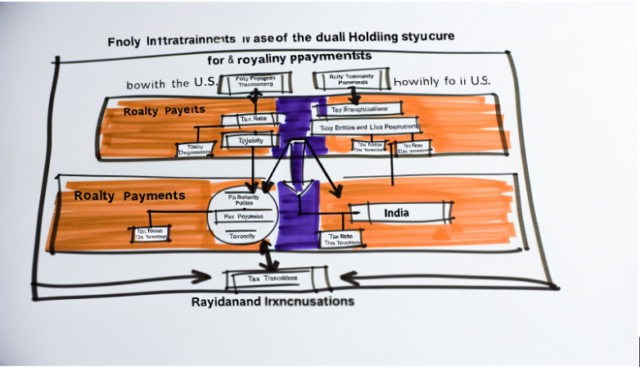
a diagram explaining the dual holding structure for royalty payments between the U.S. and India
Royalty payments represent a crucial revenue stream for companies with intangible assets. In India, optimizing these payments involves creating a tax-efficient corporate structure that leverages favorable treaties between India and the U.S. Establishing a dual holding structure allows the central management of IP while licensing it to an Indian subsidiary. This setup minimizes tax burdens under the Avoidance of Double Taxation Agreement (DTAA) between the two nations.
Proper structuring strategies ensure compliance with India’s specific regulations on royalty payments to foreign entities, subject to withholding taxes. It’s recommended that U.S. startups engage financial and tax advisory services to structure transactions and optimize tax burdens, capturing substantial savings and ensuring regulatory compliance.
Leveraging Government Schemes: Benefits and Incentives for Startups in India

a collage of Indian government incentive programs and initiatives aimed at startups
The Indian government has launched several initiatives to promote entrepreneurship under the Startup India program. Startups can self-certify compliance with 6 labour laws and 3 environmental laws through an online procedure. Significant benefits for registered startups include tax exemptions for three consecutive financial years under Section 80 IAC, access to capital through government grants, and reduced regulatory complexities. The abolition of angel tax further reduces financial burdens, and startups benefit from direct participation in public procurement and reduced costs for patent filings.
Startups are encouraged to explore the programs available through Startup India, which include sector-specific incentives, access to the Fund of Funds for Startups (FFS), and the Startup India Seed Fund Scheme (SISFS) to support proof of concept and commercialization efforts. Furthermore, startups with simple debt structures can be wound up within 90 days of filing an application for insolvency, providing an efficient exit strategy if necessary.
Compliance and Documentation: Essential Requirements for Registration
Ensuring compliance with Indian regulations necessitates comprehensive and precise documentation. Essential documents include a Certificate of Incorporation, environmental clearances, labor law certifications, and compliance with local operational statutes. U.S. startups must also consider industry-specific licenses and approvals.
Proper preparation and verification of these documents can prevent delays and ensure a smooth registration process. Utilizing an online platform like the MCA’s SPICe+ for documentation filing greatly streamlines compliance and simplifies legal processes for new business entries.
Choosing the Right Business Structure: Trade-offs and Benefits
The choice of business structure affects operational flexibility, liability exposure, and scalability potential. A Private Limited Company offers limited liability and is ideal for businesses seeking investment and scalability. In contrast, an LLP provides a flexible operational structure with limited legal burdens, suitable for firms prioritizing partnership dynamics.
Each option requires a clear understanding of your strategic goals. Weighing the benefits, such as ease of operation, regulatory burden, scalability, and investment opportunities, helps ensure the selection of a structure best suited to drive long-term business growth.
The Role of DPIIT Recognition in Facilitating Business Operations
Recognition by the Department for Promotion of Industry and Internal Trade (DPIIT) simplifies several operational aspects for startups. It enables access to various programs and reduces compliance burdens, offering benefits such as tax exemption, easier public procurement, and priority in patent processing. DPIIT recognition enhances a startup’s market presence by associating it with a robust ecosystem for innovation and growth.
Addressing Challenges and Overcoming Pitfalls in Indian Market Entry
Entering the Indian market comes with challenges, including regulatory complexity, cultural adjustments, and logistics. Pitfalls such as incomplete documentation, misinterpretation of regulations, and lack of a tailored market strategy can hinder progress. Engaging with local advisors familiar with the Indian landscape is instrumental in mitigating these risks and ensuring a smoother entry strategy.
Engaging Professional Advisors for Seamless Market Entry and Operations
Professional advisors play a pivotal role in guiding U.S. startups through the complexities of setting up and operating a business in India. Legal advisors ensure compliance with Indian regulations, while tax professionals optimize business structures for tax efficiency. Engaging with local business consultants provides insights into cultural and market nuances, essential for effective business strategies and operational success.
In conclusion, successfully registering a company in India is not merely about adhering to regulatory requirements but crafting an efficient operation that accommodates IP management and royalty optimization. U.S. startups venturing into India should leverage professional expertise, government incentives, and strategic fiscal structures to secure a profitable and sustainable foothold. With careful planning and strategic execution, your business can thrive in India’s dynamic marketplace.
🌐 Website: https://knmindia.com
📞 Telephone and Contact Information:
Tokyo: +81-3-6869-0850
India: +91-124-4295170, +91-99105-04170
📧 Email: services@knmindia.com
📩 Contact: The contact page on knmindia.com allows you to contact our experts.